Understanding Conference Tables
What are Conference Tables?
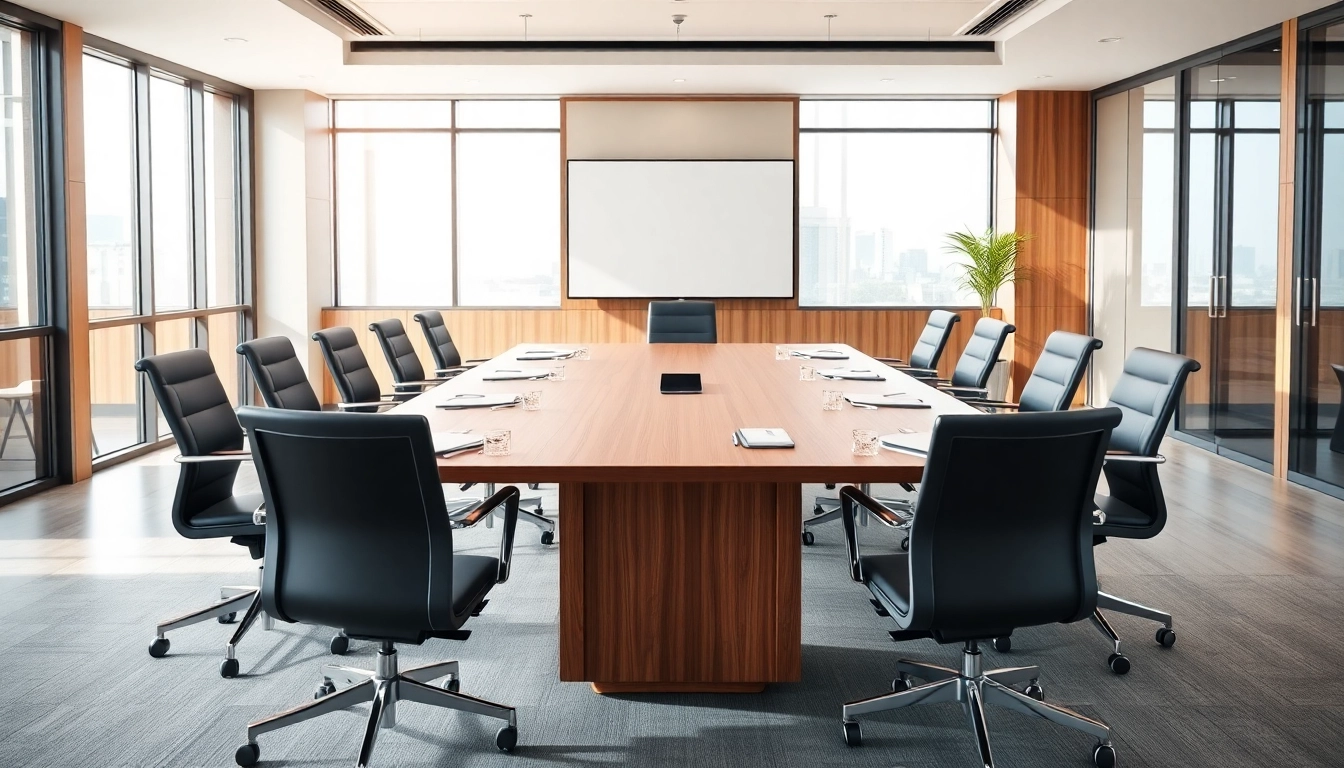
Conference tables are large, often rectangular or oval-shaped tables specifically designed for meetings, discussions, and collaborative work. They serve as the central point where teams gather to brainstorm ideas, make crucial decisions, and foster collaboration. Typically found in boardrooms, meeting rooms, and collaborative spaces, Conference tables play a vital role in the functionality and aesthetics of a workspace. The design of these tables often reflects the culture and status of the organization, making them not just furniture but a statement piece within an office environment.
Types of Conference Tables
Choosing the right conference table is essential for ensuring that meetings are effective and comfortable. There are several types of conference tables, each catering to different needs and spaces:
- Rectangular Tables: The most common type, ideal for traditional boardrooms and allows for various seating arrangements.
- Round Tables: Promotes inclusivity and equality among participants, making it suitable for small groups.
- Oval Tables: Combines the benefits of rectangular and round designs, offering a more elongated surface area without sharp edges.
- U-Shaped Tables: Facilitates presentations and discussions among larger groups, allowing everyone to see the speaker.
- Modular Tables: Flexible and customizable, these tables can be rearranged or reconfigured according to specific meeting needs.
Choosing the Right Size for Your Space
When selecting a conference table, size matters significantly. The size should not only accommodate the number of participants but also leave enough room for movement and additional equipment. Here are key considerations for determining the right size:
- Participant Count: Allocate approximately 2-3 feet of table space per person to ensure comfort.
- Room Dimensions: The table should fit comfortably within the room. Leave at least 3 feet of clearance around the table for movement.
- Purpose of the Meeting: Consider if technology and other equipment will be used, which may require additional space.
The Importance of Conference Tables in Business
Enhancing Collaboration and Communication
Conference tables are integral to collaboration and communication in the workplace. A well-designed table can significantly enhance participant interaction and engagement. The arrangement, size, and shape of a conference table dictate how easily people can communicate. Flatter surfaces like round or oval tables can promote open dialogue and equal participation, fostering a culture of teamwork.
Impact on Meeting Productivity
Meetings can often be seen as unproductive. However, a thoughtfully chosen conference table can transform this perception. The right table can facilitate clear communication and decision-making processes. Research suggests that comfortable seating and appropriate table sizes can lead to increased engagement and better outcomes in meetings. Factors such as visibility to the leader and the ability to easily see shared materials enhance productivity.
Creating an Inspiring Work Environment
Aesthetics play a crucial role in workplace dynamics. Conference tables contribute not only to functionality but also to the overall ambiance of the meeting space. A well-designed table can project professionalism, inspire creativity, and encourage collaboration. Selecting materials and finishes that align well with your brand identity can further enhance the overall aesthetic and create a welcoming environment for both employees and clients.
Key Features to Consider in Conference Tables
Materials and Finishes
Conference tables come in various materials, each offering distinct advantages and disadvantages:
- Wood: Classic and durable, wooden tables provide a touch of elegance, but they can be heavy and may need more maintenance.
- Glass: Ideal for modern offices, glass tables can create an airy feeling and support a minimalist aesthetic. They can, however, be prone to scratching and require careful handling.
- Metal: Strong and long-lasting, metal tables can be sleek and modern but may lack warmth.
- Composite Materials: These often combine the best properties of wood, metal, and glass, offering versatility in style and function.
Design and Aesthetic Appeal
The design of conference tables should complement the overall office aesthetic. Factors to consider include:
- Style: Choose a style that harmonizes with existing office furniture for a cohesive look.
- Color: Color can influence mood; softer hues may promote relaxation, while bold colors can stimulate energy and creativity.
- Shape: The shape should facilitate the intended interaction patterns among participants, whether formal or informal.
Functional Aspects (Power Ports, Mobility)
As technology continues to evolve, so do conference tables. Modern designs increasingly incorporate functional features to support productivity:
- Power Ports: Built-in electrical outlets allow participants to connect devices effortlessly, minimizing disruptions.
- Wheels: Mobile conference tables can be reconfigured easily, accommodating various meeting styles and needs.
- Integrated Technology: Features such as cable management systems help keep the space organized and free from clutter.
Setting Up Your Conference Room
Layout Options for Conference Tables
Once you've selected the right conference table, the next step is organizing your conference room layout. Various arrangements can optimize space and enhance interaction:
- Theater Style: Rows of seating facing a focal point (ideal for presentations).
- Boardroom Style: A large table with chairs around it, encouraging discussion and collaboration.
- U-Shape: Facilitates open dialogue and allows for presentations within the group.
- Circle Style: Promotes equality and encourages participation from everyone.
Maximizing Space and Comfort
Comfort is critical in ensuring productive meetings. To maximize space and comfort:
- Adjustable Chairs: Provide options for height and support, ensuring comfort during longer meetings.
- Room Acoustics: Consider sound-absorbing materials to minimize distractions and enhance focus.
- Technology Accessibility: Ensure participants can easily access technology without crowding the workspace.
Integrating Technology with Conference Tables
Technology integration into the conference room is essential for modern meetings. Conference tables equipped with integrated technology help streamline presentations, virtual meetings, and collaboration:
- Screen Integration: Built-in screens enable seamless presentations, enhancing visual engagement.
- Video Conferencing Tools: Tables equipped with cameras and microphones facilitate remote participation, making it accessible for all attendees.
- Collaboration Software: Use software solutions that allow real-time collaboration and document sharing during meetings.
Trends in Conference Tables
Modern Styles and Materials
The conference table market is continually evolving, introducing modern styles and innovative materials to meet the demands of contemporary workplaces. Trends include:
- Minimalist Designs: Simple, clean lines create a professional look while encouraging focus.
- Mixed Materials: Combining wood, metal, and glass can create unique and visually appealing designs.
- Flexible Configurations: Tables that can switch between collaborative and formal configurations accommodate various meeting styles.
Sustainable Options for Eco-Friendly Offices
As the global focus on sustainability increases, environmentally friendly options are becoming more sought after. Eco-friendly conference tables use sustainable materials and practices, promoting a green office culture. Here are some approaches:
- Reclaimed Wood: Using reclaimed materials reduces waste and creates a unique aesthetic.
- Low-VOC Finishes: These finishes improve air quality and reduce harmful chemical exposure.
- Green Certifications: Look for products certified by environmental organizations, ensuring that they meet sustainable standards.
The Future of Collaborative Meeting Spaces
The landscape of workplace collaboration continues to shift, signaling a need for adaptable conference table designs that facilitate new ways of working. Future trends may encompass:
- Hybrid Spaces: Designs that accommodate both in-person and virtual interactions seamlessly will become standard.
- Multi-Functional Furniture: Conference tables that easily transition from meeting spaces to collaborative workspaces will gain popularity.
- Smart Tables: Integration of IoT technology will provide enhanced features such as environmental controls, integrated displays, and data analytics to improve meeting efficacy.