
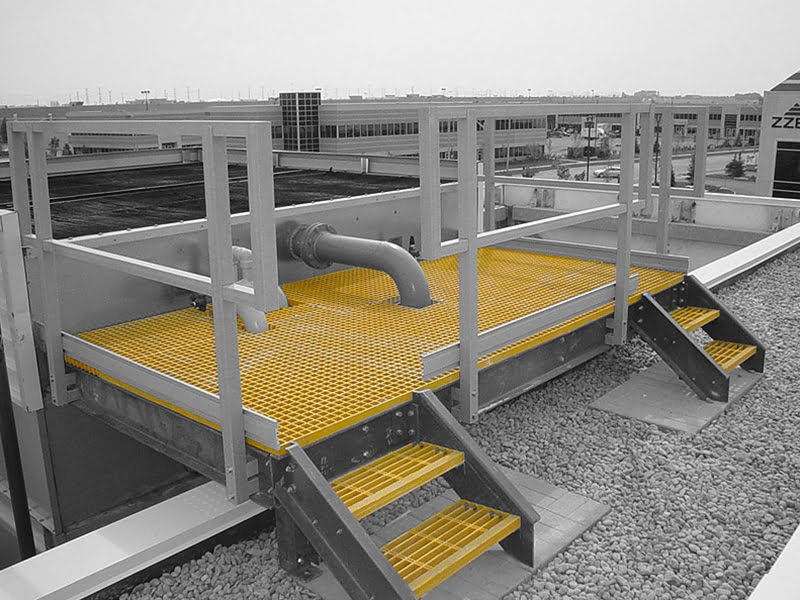
In modern industrial environments, the demand for durable, reliable, and low-maintenance flooring solutions has never been higher. Facilities that operate in corrosive, wet, or high-traffic areas require materials that not only withstand these conditions but also maintain safety standards over extended periods. GRP Grating has emerged as an ideal solution for such challenges, offering a combination of strength, resilience, and versatility that traditional steel or timber gratings struggle to match.
GRP Grating, short for Glass Reinforced Plastic Grating, has gained popularity across a wide array of industries, from construction and transport to water treatment and marine environments. Its unique composition of thermosetting resin and glass fibers provides structural integrity while remaining lightweight and resistant to harsh environmental factors.
This article delves deeply into why GRP Grating is considered the go-to option for demanding conditions, exploring its key advantages, applications, cost-effectiveness, and environmental benefits.
Understanding GRP Grating
GRP Grating is a composite material manufactured using high-strength glass fibers embedded in a resin matrix. This combination produces a lightweight yet incredibly strong material, capable of resisting corrosion, fire, and chemical damage. Unlike metal or timber, GRP does not require protective coatings, making it low-maintenance and ideal for industrial use.
There are primarily two types of GRP Grating:
Moulded GRP Gratings: These are produced by molding resin and fibers into a grid pattern, creating a grating with superior impact resistance. They are particularly suitable for environments exposed to moisture and chemicals.
Pultruded GRP Gratings: Made by pulling continuous glass fibers through resin to form rigid profiles, pultruded gratings are stronger and stiffer, making them perfect for heavier loads and longer spans.
Both types are non-conductive, fire-retardant, and exceptionally durable, making them a safe and cost-effective choice for industrial flooring, walkways, and platforms.
Key Advantages of GRP Grating in Harsh Environments
The following features make GRP Grating especially suited for challenging conditions:
Corrosion Resistance
Traditional steel gratings can succumb to rust, especially in marine, chemical, or wastewater environments. GRP Grating, however, is inherently resistant to corrosion caused by water, chemicals, oils, and salt. This results in:
- A longer lifespan even in highly corrosive settings
- Minimal maintenance and repair costs
- No need for coatings, galvanizing, or other protective treatments
Industries such as marine, chemical processing, and water utilities benefit immensely from this property, as it significantly reduces operational downtime and maintenance expenses.
Lightweight but Strong
One of the most notable advantages of GRP Grating is its exceptional strength-to-weight ratio. While being far lighter than steel, GRP provides comparable structural integrity. This makes installation, handling, and transportation easier, especially in remote or elevated locations. The benefits include:
- Reduced installation time and labor costs
- No heavy machinery required for lifting
- Safer manual handling for workers
This combination of lightweight and strength makes GRP Grating an efficient solution for platforms, catwalks, and other high-access areas.
Slip Resistance
Safety is a paramount concern in industrial settings. Many GRP Gratings feature a built-in anti-slip surface, often achieved by incorporating quartz grit. This enhances grip, even under wet or oily conditions, ensuring:
- Enhanced workplace safety
- Compliance with occupational health and safety standards
- Fewer accidents and associated operational disruptions
This property makes GRP Grating ideal for walkways, maintenance platforms, and access areas where worker safety is critical.
Fire Retardancy and Non-Conductivity
GRP Grating is naturally non-conductive, making it safe for electrical environments. It can also be manufactured using fire-retardant resins, which reduces the risk of fire in industrial spaces. Key advantages include:
- Compliance with fire safety regulations
- Safer working conditions in flammable or high-risk areas
- Reduced risk of electrical hazards
These features make GRP Grating an optimal choice for offshore platforms, chemical plants, and electrical installations.
Applications of GRP Grating
The versatility of GRP Grating has made it a preferred choice across numerous industries:
Construction & Infrastructure: GRP Grating is widely used in walkways, catwalks, and maintenance platforms, particularly in environments prone to moisture or corrosive substances.
Water Treatment & Utilities: Facilities like sewage treatment plants, pumping stations, and waterworks benefit from GRP Grating due to its resistance to chemicals and water exposure.
Marine & Offshore: Saltwater environments, including jetties, pontoons, and offshore rigs, demand materials that withstand corrosion, making GRP Grating a perfect solution.
Transport & Rail: Non-slip, lightweight gratings are ideal for station platforms, access areas, and trackside maintenance paths.
Chemical & Manufacturing Facilities: GRP Grating offers excellent chemical resistance and durability in high-traffic, industrial environments.
Long-Term Cost Efficiency
While GRP Grating may have a higher initial cost than timber or steel, its total cost of ownership is considerably lower due to:
- No corrosion and extended service life
- Minimal maintenance and repair requirements
- No need for protective coatings or galvanization
- Lifespan often exceeding 20 years
For industries prioritizing long-term performance and safety, GRP Grating represents a smart investment.
Environmental Advantages
GRP Grating supports sustainable industrial practices:
- Extended lifespan reduces the frequency of replacement
- Low-maintenance nature minimizes chemical use
- Lightweight design lowers emissions during transportation and installation
- Recyclable at the end of its life cycle
These factors make GRP Grating a responsible choice for environmentally conscious operations.
FAQs About GRP Grating
What makes GRP Grating better than steel gratings?
GRP Grating offers comparable strength to steel but is significantly lighter, corrosion-resistant, and non-conductive. This reduces maintenance costs and improves safety in industrial environments.
Can GRP Grating handle heavy loads?
Yes. Pultruded GRP Grating is specifically engineered for high-load applications, with customizable span and strength options to meet industrial requirements.
Is GRP Grating easy to install?
Absolutely. Its lightweight nature makes handling and installation simpler, requiring less labor and eliminating the need for heavy lifting equipment.
Conclusion
GRP Grating is transforming industrial infrastructure by providing a durable, safe, and cost-effective solution for harsh environments. Its exceptional corrosion resistance, lightweight strength, slip-resistant surface, and fire-retardant properties make it the ideal choice for industries ranging from marine and transport to chemical processing and utilities.
For companies seeking long-term reliability, safety, and performance, switching to GRP Grating represents a forward-thinking investment. Explore high-quality, engineered solutions today and experience the unparalleled benefits of GRP Grating in harsh industrial conditions. Explore our homepage now to stay ahead in the digital world.